Beveled Edge — Egyptian Marble & Granite
The beveled edge — chamfered, in Commonwealth workshops — is the one profile that adds light to a countertop. The sharp corner is replaced by a flat cut at 45°, and that angled facet catches illumination as a bright, continuous line along the stone’s length. Where an eased edge tries to disappear, a bevel draws the eye on purpose.
What a Beveled Edge Is
A flat chamfer is machined at 45° across the top arris, then polished to match the surface. The geometry does two jobs at once. Aesthetically, the facet defines the countertop’s silhouette with a crisp shadow-and-light line no rounded profile can make. Practically, it removes the fragile 90° corner entirely — the point where most edge chips begin — replacing it with two obtuse angles that shrug off daily knocks.
Why Choose a Beveled Edge?
- Elegant architectural appearance — the 45° facet outlines the stone in light.
- Chip-resistant and safer than a sharp square edge.
- Easy to clean and maintain.
- Suitable for heavy residential and commercial use.
- Available in custom bevel sizes and stone thicknesses.
- Complements polished, honed, leathered and other finishes.
Where It’s Used
Contemporary kitchens and commercial counters lead: the beveled edge suits crisp, architectural interiors where a bullnose would feel soft. It is equally at home on bathroom vanities, kitchen islands, reception desks, table tops, window sills, stair treads, fireplace surrounds and as a tile edge detail where two planes meet. Project types range from luxury villas to hotels, restaurants, retail stores and office buildings. Cut per piece on any stone and surface finish we produce — order it on our granite and marble countertops alongside other profiles in one shipment.
Available Natural Stones & Manufacturing
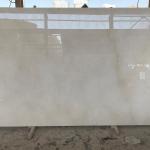
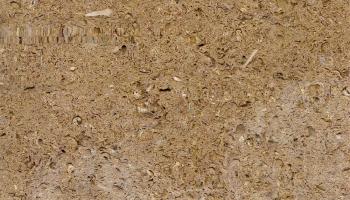
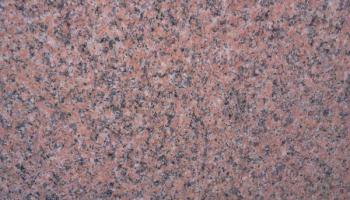
Mega Trade Misr fabricates beveled edges on Egyptian marble, granite, limestone, travertine and quartzite, manufactured to customer drawings:
- Selection of premium stone slabs.
- CNC cutting to exact dimensions.
- Precision bevel machining at 45°.
- Multi-stage polishing or finishing.
- Quality inspection for dimensions and edge consistency.
- Protective packing for international export.
Beveled or Eased?
The two contemporary profiles, one line each: eased softens the corner invisibly — the stone reads as a pure square edge. Beveled makes the corner treatment visible — a deliberate 45° detail that outlines the stone in light. Both resist chipping far better than a sharp square corner; the choice is whether you want the edge noticed. For rounded and rustic alternatives, see all eight profiles in our edge finishes guide.
Why Mega Trade Misr
Mega Trade Misr combines experienced craftsmanship with modern CNC machinery to produce export-quality natural stone. We support wholesalers, contractors, architects, distributors and project developers with custom fabrication, reliable production schedules, professional packing and worldwide shipping.
Frequently Asked Questions
What is a beveled edge?
A profile where the top edge is cut flat at an angle — usually 45° — to create a refined, light-catching appearance instead of a sharp square corner.
What is the difference between a beveled and an eased edge?
Visibility. An eased edge hides its softening — the profile still reads square. A beveled edge shows it: a crisp 45° facet that catches light as a line along the countertop. Both are highly chip-resistant.
Is this the same as a chamfered edge?
Yes — “beveled” and “chamfered” describe the same 45° flat. We cut it to your drawing under either name.
Why are beveled edges chip-resistant?
Most chips start at a sharp 90° corner. The bevel removes that corner entirely, replacing it with two blunter angles that distribute impacts instead of concentrating them.
Can the bevel angle or size be customized?
Yes. Dimensions and bevel sizes are produced according to project drawings.
Which stones are suitable?
Marble, granite, limestone, travertine, quartzite and other natural stones.
Is it suitable for commercial projects?
Yes. It is widely used in hotels, malls, offices and public buildings.
Can you export worldwide?
Yes. Products are packed for safe international transportation.